

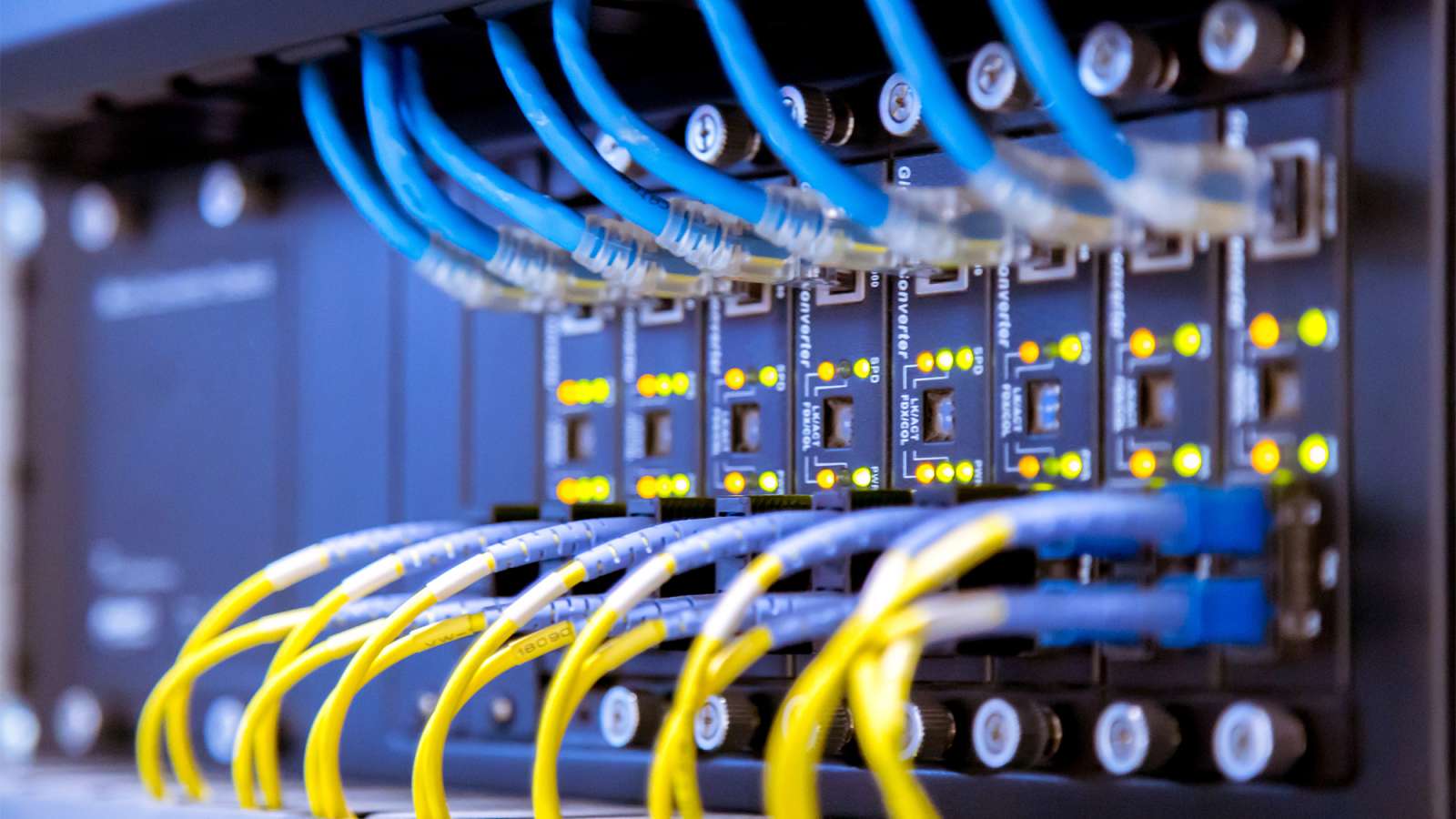
Cat6 vs. Fiber in LA: Why Your Office Cabling Choice Could Dictate Your Business’s Future
Los Angeles is a city built on motion. From the sprawling freeways to the fast-paced rhythms of its business districts, success often comes down to speed and reliability. In the digital age, this need for velocity extends to the very infrastructure of our office buildings. It’s what makes the choice between Cat6 and fiber optic cabling for your office network cabling installation in Los Angeles a strategic decision that can define your business’s future. The physical wires hidden behind your walls are the foundation for your cloud access, VoIP calls, and client communication, and in a city where every second counts, a foundational mistake can be costly.
The Digital Backbone: Why Your Cabling Choice Defines Your Network’s Future
It’s easy to view network cabling as a mere utility, similar to installing a standard electrical outlet. But in modern business, your structured cabling system functions as the central nervous system of your office. It carries the lifeblood of your operations, including data, voice, and video, and dictates the performance of every system it touches.
Many Los Angeles businesses operate in older, retrofitted buildings with a patchwork of wiring that is wholly inadequate for today’s demands. A 2024 analysis indicated that underperforming internal network infrastructure is a “silent tax” on productivity for an estimated 60% of local small to mid-sized businesses. This means you could be paying for top-tier internet speeds, but your outdated cabling is preventing that speed from ever reaching your employees’ desks, effectively wasting your investment.
When considering office network cabling installation in Los Angeles, the fundamental debate comes down to two primary technologies: copper and fiber. While many use these terms interchangeably, they are vastly different in construction, performance, and purpose.
The Contender: Cat6 Copper Cabling
For decades, copper cabling has been the standard for office networks. Its most advanced and commonly installed form for modern businesses is Category 6 or Category 6A. Cat6 cable uses copper wires to transmit data via electrical signals.
Benefits and Capabilities of Cat6 in LA Offices
Despite the rise of fiber, Cat6 cabling is far from obsolete. In fact, for many small and medium-sized businesses, it remains the smartest, most cost-effective choice for specific parts of the network.
For horizontal runs connecting the network closet to individual workstations, Cat6 is the ideal choice. A 2023 CompTIA study found that bandwidth demands for the average business workstation have increased by over 300% since 2018. Cat6 and Cat6A cabling are specifically designed to handle these modern demands. In an office environment, a Cat6 copper cable provides a perfect balance of performance and price.
One of the most significant advantages of copper is its ability to deliver Power over Ethernet (PoE). This allows a single cable to supply both data and electrical power to devices like VoIP phones, wireless access points, and security cameras. Fiber optic cables cannot do this natively. This feature makes copper the preferred choice for any Los Angeles office relying on these devices.
When Cat6 is the LA Smart Choice
- Workstation Connections: For standard office functions like email, web browsing, and using cloud apps such as Microsoft 365 or Google Workspace, Cat6 is capable and cost-effective.
- Powering Devices: Any device that requires power, such as a VoIP phone or an access point, is better served by copper’s PoE capability.
- Short Distances: For network cable runs under 100 meters, Cat6 delivers excellent performance.
However, even Cat6 has its limits. It is susceptible to electromagnetic interference (EMI), which is a problem in high-density Los Angeles areas with heavy electrical equipment. More importantly, its maximum distance of 100 meters before signal degradation makes it unsuitable for connecting different floors or buildings on a single campus.
The Contender: Fiber Optic Cabling
Where copper uses electricity, fiber optic cables transmit data as pulses of light through glass or plastic strands. This fundamental difference makes fiber superior in speed and reliability, especially over long distances.
The Fiber Advantage for Los Angeles Business Campuses
For Los Angeles businesses with multiple buildings or expansive office floors, fiber isn’t a luxury, it’s a necessity.
“The data needs of our clients are changing. A decade ago, cabling was just about moving files. Now it’s about enabling real-time collaboration on 4K video, VR training, and AI tools. Fiber is the only medium that confidently supports that future.” says Abner Navarro, Network Support Specialist at ITTC. “Good IT support isn’t just about fixing issues, it’s about anticipating the needs of our clients and building a network that won’t bottleneck their growth.”
The core advantages of fiber become apparent in its technical specifications. Fiber is immune to EMI, providing a stable connection even in industrial or high-interference environments. It can support speeds of 40G, 100G, and even 400G, while its single-mode variants can carry a signal for several kilometers without loss of signal, making it ideal for connecting the main distribution frame (MDF) to intermediate distribution frames (IDFs) across a campus or within a large building.
When Fiber is the Non-Negotiable Choice
- Backbone Connections: Connecting your main server room to wiring closets on other floors or across a campus demands the speed and distance capabilities of fiber.
- High-Performance Demands: If your business handles massive data transfers, such as video production in Hollywood or complex 3D modeling for architects, fiber eliminates bottlenecks.
- Future-Proofing: For companies building new headquarters or undergoing major renovations, the incremental cost of installing fiber is small compared to the cost of retrofitting it later. It ensures your infrastructure will support the unknown demands of the next decade.
Making the LA Choice: Strategy, Not Just Budget
The decision between Cat6 and fiber optic cabling isn’t a competition. In modern office network cabling installation in Los Angeles, they are complementary technologies. The right strategy for your business is a hybrid approach that uses the strengths of both.
Fiber serves as the highway, moving massive amounts of data between floors and buildings at high speed. Cat6 serves as the local roads, efficiently delivering that data to individual workstations. A network designed without fiber is like an LA freeway that grinds to a halt at every exit. A network designed without copper is like having a high-speed freeway with no way to get to your front door.
The Cost Perspective: A Question of Value
Many business owners lean toward an all-Cat6 solution because it has a lower upfront cost. The cost to install low voltage cabling in Los Angeles for standard Cat6 drops can range from $100 to $300 per drop, while fiber optic cabling can start at $500 to $1,000 per line and go up depending on the complexity of the project .
However, there is a high cost to being “penny wise and pound foolish.” As Abner Navarro insightfully notes, “Good IT support isn’t just fixing issues, it’s anticipating them.” Installing outdated cabling to save a few hundred dollars now means you will pay more in lost productivity, downtime, and expensive upgrades later.
Consider this: According to Statista (2024), the average downtime cost for a small business is now $427 per minute. If you lose even just 15 minutes a day due to a slow, unreliable network, that is over $3,000 a week in lost productivity and opportunity . This doesn’t include the intangible costs of frustrated employees and unhappy clients. This is why the “fiber vs. copper” question is a forward-thinking strategy about your business’s future competitiveness, not just an immediate cost analysis.
The ITTC Advantage: Your Local LA Cabling Experts
The diverse layout of Los Angeles office spaces presents unique challenges. Running cabling in a high-rise in Downtown LA is different than in a sprawling tech campus in Playa Vista or a converted warehouse in the Arts District. Compounding this is the fact that many of these buildings feature older construction, dense power lines, and challenging pathways.
“On-site experience is invaluable,” says Juan Turcios, President & CEO of ITTC. “There’s a difference between telling a client how to fix something over the phone and being there in person, seeing the entire environment. We can solve the immediate problem and often identify a potential issue two steps down the line.”
ITTC understands these challenges intimately. As a local Los Angeles firm, we have worked in every corner of the city, from the historic buildings in the Financial District to the modern creative offices in Santa Monica. Our team doesn’t just read blueprints; we physically assess your space and design a cabling solution that is built to last.
Our local presence ensures we can provide fast, responsive support. When your team needs a hands-on fix, a hardware upgrade, or a new office cabling run, we can deploy our field technicians quickly to your site. This eliminates the delays and inefficiencies of working with an out-of-state vendor.
Conclusion: Build Your LA Office for Today and Tomorrow
Your choice of cabling is a foundational decision for your business. In a city powered by innovation and speed, settling for an outdated or inadequate network infrastructure is an expensive risk.
The goal is not to decide between Cat6 or fiber. Instead, the goal is to build a robust, future-proof network that leverages the best of both technologies. Your business deserves a cabling system designed to handle the demands of today’s high-bandwidth applications while being ready for the technological leaps of tomorrow.
Ready to Build Your Network’s Future? Let’s Talk.
Don’t let outdated cabling be the bottleneck that holds your Los Angeles business back. The experts at IT Training & Consulting, Inc. are ready to assess your needs and design a custom network infrastructure solution that aligns with your business goals.
Call IT Training & Consulting, Inc. today at (844) 804-4882.
Our team of specialists, including Network Support Specialists like Abner Navarro and IT Field Technicians like Nestor Turcios, are ready to guide you through every step of the process. Reach out now to secure a reliable, fast, and future-ready foundation for your business.