
If your California commercial project involves network cabling, security cameras, fiber, or a server room buildout, the short answer is this: you need a low voltage contractor, not a general electrician. In California, these are separate licensing classifications with different…
There is no universal square-foot number that answers this question correctly. A practical starting point for many offices is one access point per 1,200 to 2,000 square feet of open floor space, but that estimate only addresses coverage. The actual…
An office network setup is not a single purchase or a one-day installation. It is the coordinated design of cabling, pathways, network rooms, switches, wireless coverage, internet security, and documentation. When those pieces are planned together, the network is easier…
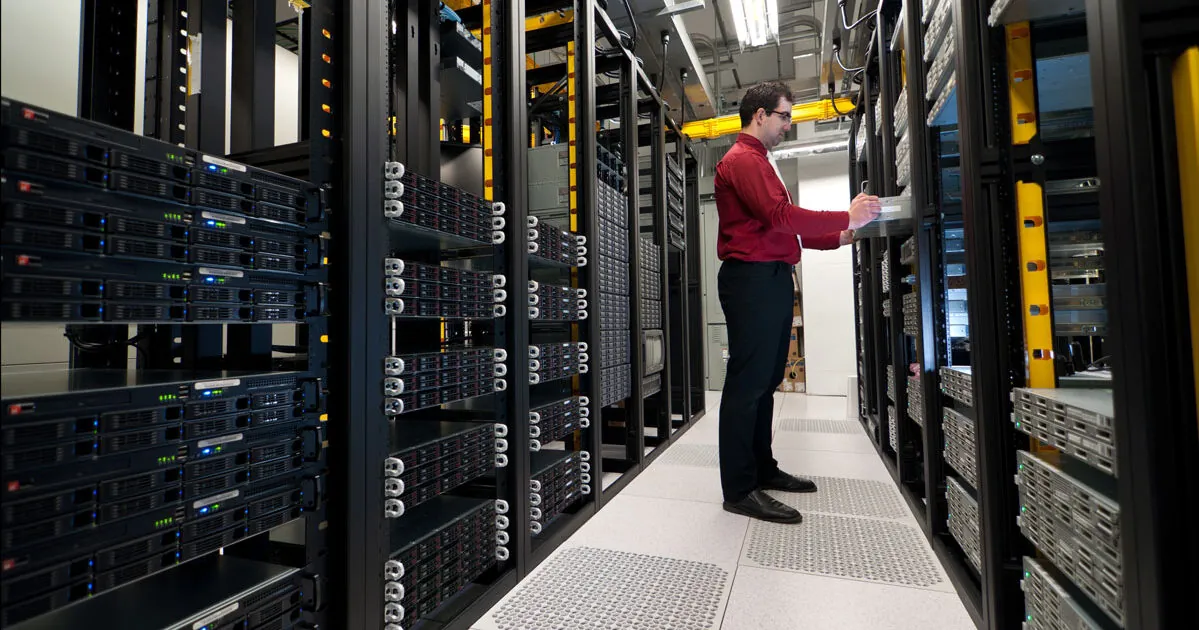
Server room cable management is the practice of routing, supporting, labeling, and documenting every copper and fiber cable inside a server room so the infrastructure remains stable as equipment changes. Good management is not cosmetic. It determines how quickly a…
The main difference between an MDF and an IDF is scope and position in the network. An MDF, or main distribution frame, is the primary telecommunications hub for a building. It typically houses the core switching, routing, and entrance facilities…
Fiber splicing creates a permanent joint between two optical fibers so light can pass from one strand into another with minimal loss. For commercial networks, the practical choice is usually straightforward: fusion splicing is the default for permanent, loss-sensitive fiber…
The short answer: multimode fiber is usually the practical choice for short in-building runs where transceiver cost matters, while single-mode fiber is the safer long-term investment for building-to-building links, campus backbones, and any path that may need 40G or 100G…
Fiber optic cabling uses hair-thin strands of glass to carry data as pulses of light. For California businesses, it is no longer a specialty technology reserved for data centers or carriers. Fiber is now the standard choice for building backbones,…
California does not regulate business security cameras through a single statute. Compliance depends on where cameras point, whether they capture audio, how footage is used, and whether the system monitors employees. A camera system that is perfectly legal in a…
A PoE security camera receives both electrical power and network data through a single Ethernet cable. Instead of running a separate power line to every camera location, a Power over Ethernet camera connects to a PoE-capable network switch or injector…